
The Historic Brick House: A Rare West Virginia Landmark with Deep American Roots
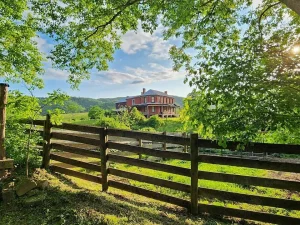
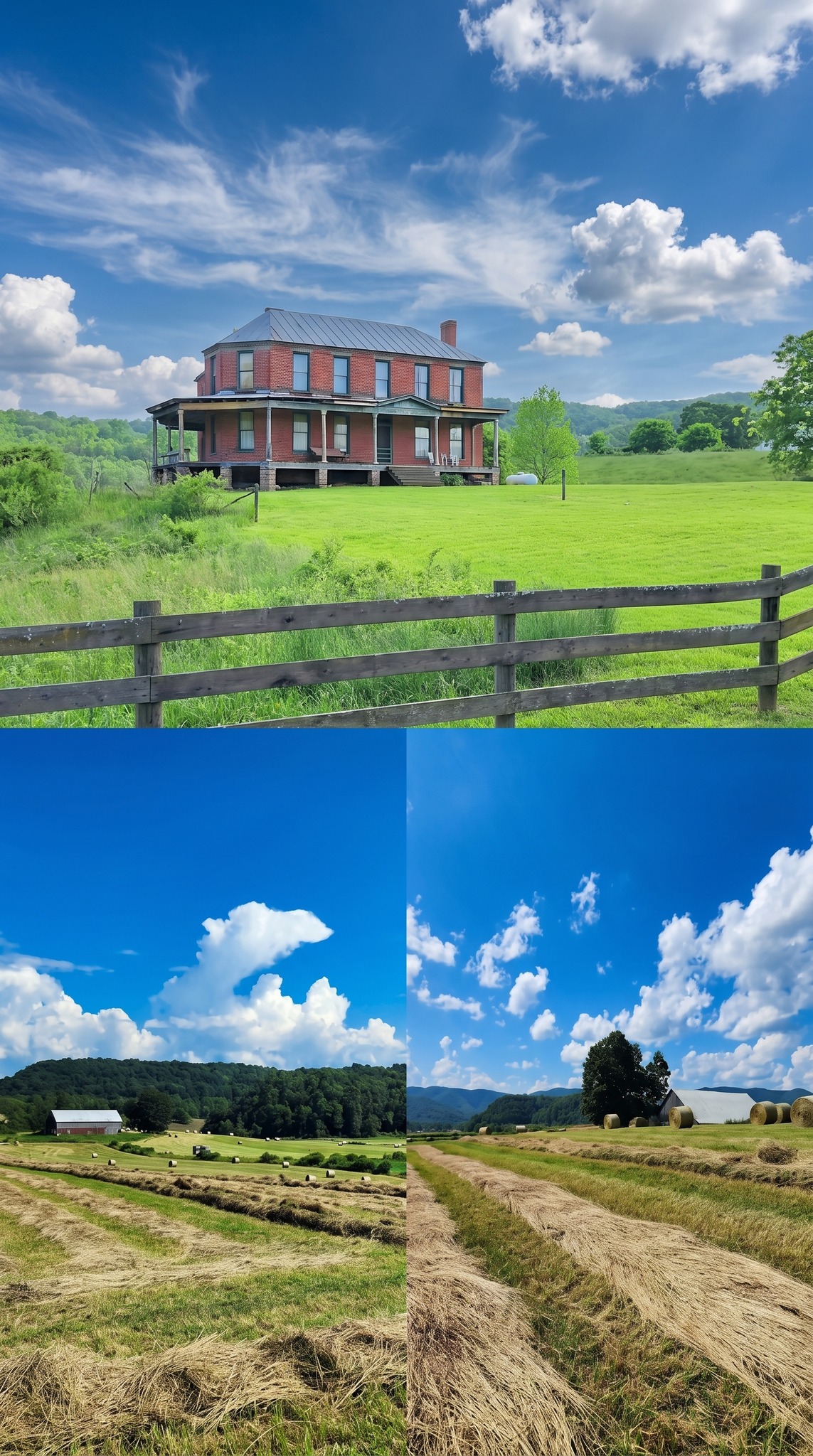
Steeped in nearly two centuries of American history, “The Brick House” stands as one of the most extraordinary and historically significant properties in the Greenbrier Valley of West Virginia. Located in the scenic Blue Sulphur Springs area near Alderson, this remarkable circa-1840 estate is far more than a home—it is a preserved piece of living history connected to early settlement, prominent local families, Civil War heritage, and even one of the most famous horses in American history: Traveller, General Robert E. Lee’s legendary war horse.
Situated on approximately 48.6 picturesque acres with breathtaking views of rolling farmland, wooded hills, and distant mountains, The Brick House offers an incredibly rare opportunity to own a property rich in architecture, heritage, and timeless Appalachian beauty. With over 4,000 square feet of historic living space and only three ownership transitions in nearly 170 years, this property is a true generational treasure unlike anything else available on the market today.
The origins of the property date back to the late eighteenth century, when Major William Hamilton arrived in the Greenbrier Valley around 1769 before settling in the Blue Sulphur area in 1773. Hamilton and his wife, Isabelle Clements, initially built a log cabin on the farm, establishing what would become one of the region’s most important homesteads. Over time, as the family prospered and their influence grew, the now-famous Brick House was constructed around 1840, likely by either Andrew Hamilton, who married Delilah Jarrett, or his brother Jacob Hamilton.
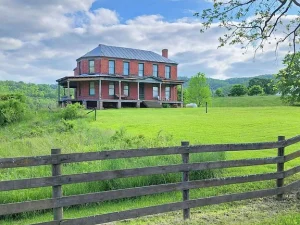
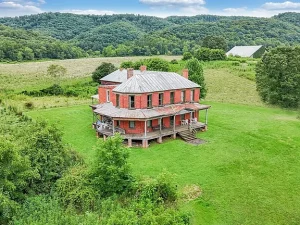
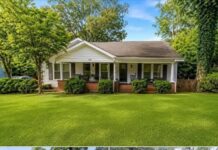
A brick near the front entrance bearing the inscription “1840” serves as a permanent reminder of the home’s origins and remarkable longevity. Architecturally, the home reflects strong influences of the Adam style, a refined design movement known for elegance, symmetry, and graceful detailing. One of the most distinctive features of the style seen in this home is the use of curved or polygonal projections extending from portions of the structure. The hipped roof design further reinforces the home’s period authenticity and historic architectural identity.
The craftsmanship of the home is believed to be closely tied to John Dunn, a well-known local brickmaker responsible for producing bricks used in the celebrated Blue Sulphur Springs Resort nearby. Historians strongly believe that while Dunn was engaged in projects at the resort, he also likely created the bricks used to construct this remarkable residence. The hand-crafted brick exterior has endured for nearly two centuries, standing today as a testament to nineteenth-century construction quality and preservation.
Originally, the kitchen existed as a detached structure, which was common during the era due to concerns about heat and fire. Over time, the kitchen was integrated into the main house through the addition of a breezeway and expanded living space above and behind the kitchen area. These thoughtful changes allowed the home to evolve while maintaining its original architectural character.
While the exterior preserves much of its classic Adamesque style, the interior reveals generations of adaptation and refinement. One of the most extraordinary features inside the home is the faux grain painting found throughout the four primary upstairs rooms. This decorative painting style was once highly fashionable and intended to imitate expensive wood grains using artistic techniques. Today, these preserved finishes represent a rare and valuable example of nineteenth-century interior decoration and craftsmanship.
The history of ownership associated with The Brick House is equally remarkable. Over a span of approximately 170 years, the property has changed hands only three times—a rarity for any historic American estate. The Hamilton family originally built and occupied the home before selling it in 1855 to the Johnston-Jarrett family. The Johnston-Jarrett lineage retained ownership for nearly a century before the property was sold to the Fleshman family in 1949. The Fleshman family has now cared for and preserved the estate for more than 76 years, ensuring its survival and continued historical integrity.
The timeline of ownership adds depth to the home’s legacy. Andrew D. Johnston purchased the property from Jacob Hamilton in 1855. Ownership later passed to Thompson Hickman Jarrett, a significant political figure who served three terms in the West Virginia Legislature and held the office of Sheriff of Greenbrier County from 1906 to 1912. Eventually, the farm was inherited by Pauline Jarrett Huff before being sold to Lewis A. Fleshman in 1949. Today, the property remains under the stewardship of Doris Fleshman Griffith.
Yet perhaps the most nationally significant chapter of the property’s history involves Traveller, the famed horse ridden by Confederate General Robert E. Lee throughout the Civil War. Traveller was born on this very farm in 1857, when the property was known as the Hamilton Farm. The horse was an American Saddlebred and quickly gained recognition for his strength, beauty, and spirited temperament.
As a young colt, Traveller earned top honors at the Lewisburg fairs in 1858, 1859, and 1860, becoming well known throughout the region. Descriptions of Traveller portray him as an impressive animal—iron gray in color with black points, standing sixteen hands tall with a flowing mane and tail. He was known for being energetic, intelligent, and occasionally difficult to handle, characteristics that ultimately matched General Lee’s preference for spirited horses.
General Lee first encountered Traveller while commanding Confederate troops near Big Sewell Mountain along what is now the Midland Trail. According to historical accounts, Lee saw the horse near a location later referred to as “Lee’s Tree.” At the time, Traveller belonged to Captain Joseph M. Broun, who had received the horse from Andrew Johnston’s son, James W. Johnston. Impressed by the horse’s qualities, Lee later purchased Traveller for two hundred Confederate dollars.
Traveller would go on to become one of the most famous horses in American history, accompanying General Lee throughout the Civil War and remaining with him during retirement. Historical accounts often note that Traveller entered battle more frequently than nearly any other Civil War horse. Following Lee’s death, Traveller famously walked behind the general’s funeral procession before passing away himself just eight months later in 1871.
An equally important aspect of Traveller’s history involves Frank Wilson, an enslaved man who trained the horse during his early years on the Hamilton Farm. After emancipation, Wilson changed his name to Frank Winfield Page. His role in Traveller’s development represents an important and often overlooked part of the property’s historical narrative. Some of the original horse training equipment connected to this history is now displayed at the North House Museum in Lewisburg.
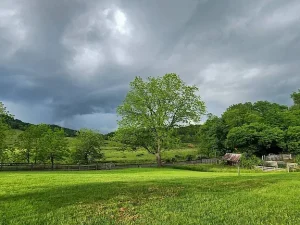
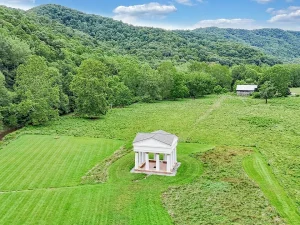
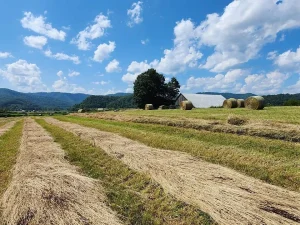
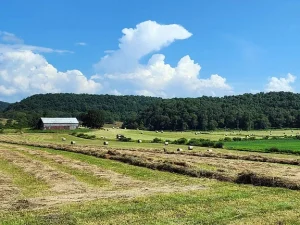
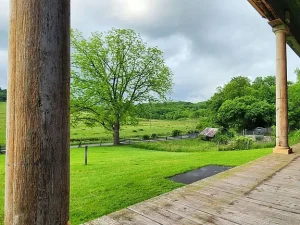
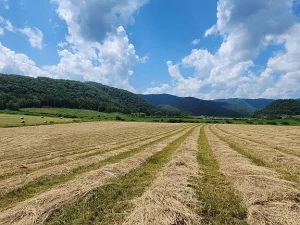
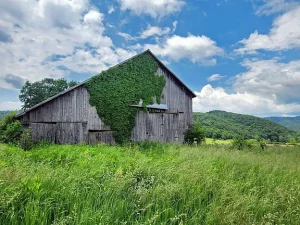
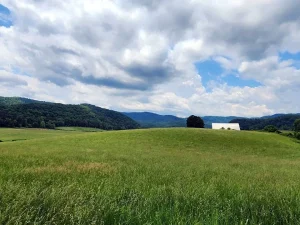
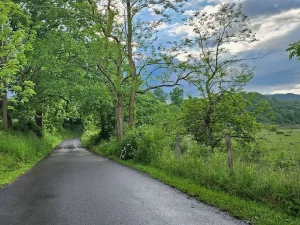
Beyond its remarkable historical significance, the property itself offers extraordinary natural beauty and privacy. Spanning nearly 50 acres, the land features panoramic views of farmland, forests, and mountain scenery that define the Greenbrier Valley landscape. The setting is peaceful, secluded, and deeply connected to the natural environment of West Virginia.
The acreage provides opportunities for farming, recreation, equestrian use, conservation, or simply enjoying a quiet rural lifestyle surrounded by history. The views from the property are particularly stunning, offering sweeping vistas of wooded hillsides and open farmland that change beautifully throughout the seasons.
The home itself includes approximately 4,028 square feet of above-ground living space. While the listing details do not specify modern bedroom or bathroom counts, the size and layout suggest significant potential for restoration, adaptation, or preservation according to the next owner’s vision. For buyers passionate about historic homes, this property presents a unique opportunity to preserve and continue an important chapter of American history.
Utilities include private septic service and well water, supporting the property’s rural setting while maintaining independence and self-sufficiency. The annual property taxes remain relatively modest considering the home’s historical importance, acreage, and size.
The Brick House is not simply a farm or a residence—it is a landmark deeply woven into the fabric of West Virginia and American history. Few properties can claim connections to early frontier settlement, prominent political figures, nineteenth-century architecture, Civil War history, and one of the nation’s most iconic horses all at once.
For historians, preservationists, equestrian enthusiasts, or buyers seeking a truly one-of-a-kind estate, opportunities like this are incredibly rare. The combination of historical authenticity, architectural significance, scenic beauty, and cultural importance makes The Brick House an irreplaceable property with enduring value.
Owning this home means becoming part of a story that stretches back more than 180 years. Every brick, every room, and every acre carries the legacy of generations who shaped the region and left a lasting mark on American history. From its elegant Adam-style architecture to its deep Civil War connections, The Brick House stands today as a symbol of resilience, heritage, and timeless beauty in the heart of West Virginia.
Listed on Zillow