

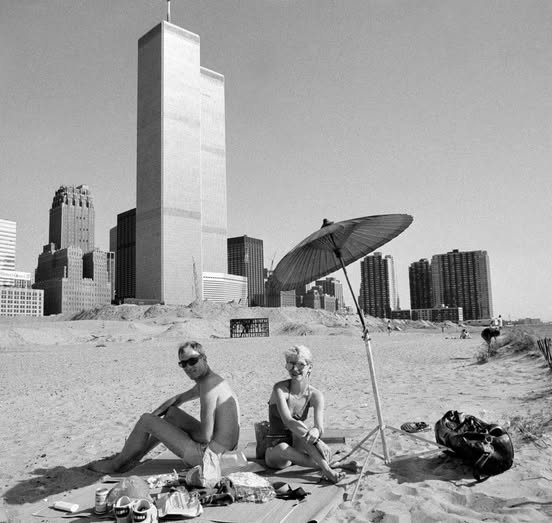
A few moments ago, I saw a stunning photograph of the Twin Towers in Manhattan, with a beautiful, serene beach in the foreground, appear on my phone’s screen. It was an image that seemed almost too perfect to be real, capturing a peaceful moment in what appeared to be a tropical paradise, where people were lounging and unwinding in the warm sand. As I stared at the image, a thought crossed my mind—could this beach truly have been in New York City? Could such a tranquil, idyllic beach have ever existed in the heart of one of the most bustling and fast-paced cities in the world?
The Forgotten Beach Paradise in New York City
It’s almost hard to imagine, but there was once a beach along the waterfront close to Battery Park, where the majestic Twin Towers once stood. Today, the area is home to towering modern buildings, busy streets, and a constant hum of urban life. The air is filled with the sounds of the city, and the skyline is dominated by the iconic Statue of Liberty in the distance. The serene rhythm of the waves against the modern promenade contrasts sharply with the energetic bustle of the city.

But despite the dynamic changes in the neighborhood, this stretch of beach was once a peaceful retreat for city dwellers. The beach became a place where people could escape the usual urban chaos, basking in the warmth of the sun while enjoying the unique proximity to the towering shadows of the World Trade Center. At that time, Manhattan’s harbor wasn’t just a symbol of commerce and industry—it was a place where residents found moments of solace, and the constant buzz of the city seemed a world away from this unexpected seaside retreat.
The Origins of the Beach: A Serendipitous Creation
This sandy retreat was not originally planned as a public oasis. It was, in fact, an unintended byproduct of the World Trade Center construction delays in the 1970s. To prepare for the towering foundations of the Twin Towers, workers dug soil from a nearby basin, creating a stretch of beach along the waterfront. This area was not designed for public use, yet the locals quickly transformed it into an unexpected sanctuary.

In no time, Manhattanites took ownership of this newly created beach, using it as a place to unwind, play, and socialize. Despite its origins as a construction site, it became a popular destination for those seeking a break from the usual hustle and bustle. Under the looming shadows of the Twin Towers, people found a small slice of tranquility by the sea. The beach became an impromptu gathering spot for beach volleyball games, sunbathing sessions, and spontaneous gatherings, drawing individuals from all walks of life.
Battery Park Beach: A Hidden Gem in Manhattan
This stretch of sandy land, which eventually came to be known as Battery Park Beach, became a hidden gem nestled at the foot of Manhattan. Despite its rough, unrefined quality, it provided a much-needed escape for New Yorkers who didn’t have access to the more traditional beaches outside the city. For residents of nearby neighborhoods like Tribeca, this beach was a beloved spot for casual weekend outings, especially on sunny days when the conditions were just right.
View this post on Instagram
Suellen Epstein, a longtime resident of Tribeca, fondly recalls her memories of spending time at the beach in the late 1970s. In an interview with Tribeca Citizen, Suellen described how, even though the sand wasn’t as soft as tropical beaches, and the waves were far from the gentle caresses of the ocean’s tide, the space offered a unique charm. Despite the modest surroundings, it was an ideal escape for a Sunday afternoon.
Suellen explained that for many, the beach became a place to experience the soothing sounds of the ocean without leaving the city. “We didn’t have the resources to go out to the Hamptons,” she said, “but we were out there on the beach every sunny Sunday—so long as it wasn’t wet.”
The Beach as a Site for Activism and Social Change
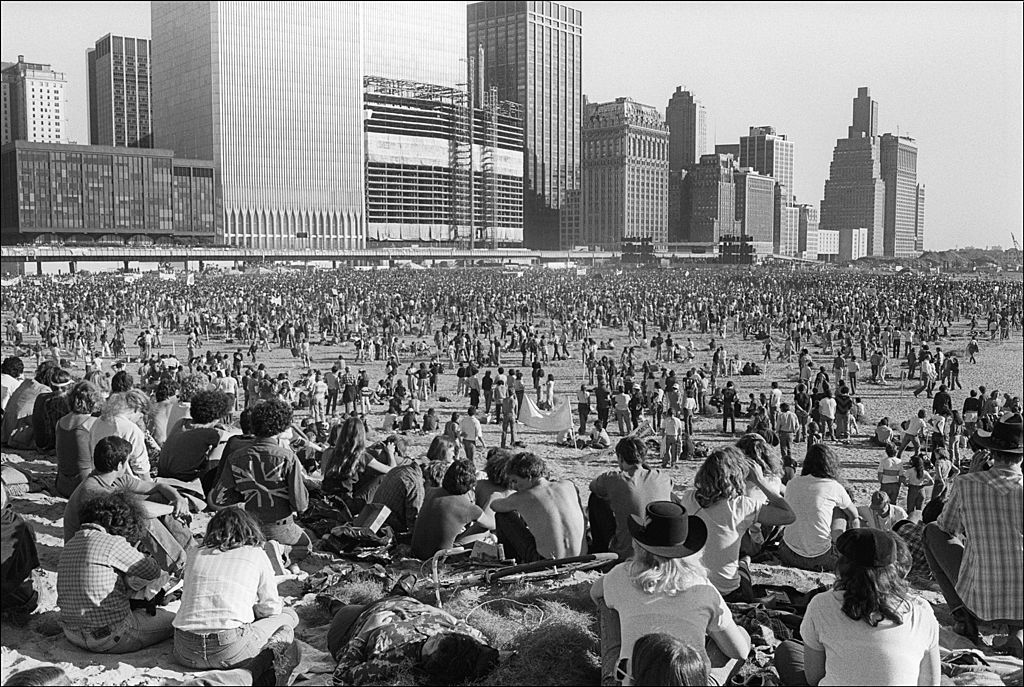
In addition to offering a retreat for relaxation, Battery Park Beach also served as a powerful stage for social movements. One of the most significant events took place on September 23, 1979, when the beach became the site of the largest anti-nuclear, pro-solar rally in history. More than 200,000 people gathered at the tip of Manhattan to protest the use of nuclear power, in the wake of the alarming Harrisburg nuclear accident earlier that year. This rally brought together a diverse group of individuals, including musicians like Pete Seeger and Jackson Browne, who performed in support of the cause. Actress Jane Fonda also made an impactful speech, energizing the crowd and helping to revitalize the national protest movement, which had largely subsided after the end of the Vietnam War.
The rally, held on the very land that had once been a construction site, symbolized the growing call for environmental awareness and a shift toward renewable energy sources. For many, the beach had now transformed into a platform for social change—where a peaceful retreat had once stood, a powerful voice for the future of the planet was being raised.
View this post on Instagram
Artistic Expression and Creative Installations
Battery Park Beach, which had originally emerged as an accidental beachfront, also became a hub for artistic expression. In the early 1980s, New York City was a hotbed of creativity, with many artists seeking new places to showcase their work. The beach, with its vast, open space and dramatic views, proved to be an ideal backdrop for various artistic endeavors.
One of the most notable artistic events on the beach was “Art on the Beach” in 1980. Sculptor Nancy Rubins, who was only 27 at the time, created a striking installation using discarded objects she gathered from local Goodwill stores. Her work, which came to be known as “rubbish tornado,” reached an impressive 45 feet high. Rubins’ project was a bold statement on waste, consumerism, and environmental issues, transforming the sand into an interactive piece of art that challenged viewers to reconsider the impact of waste on the environment.

Other artists, like Agnes Denes, brought their own imaginative visions to the beach, with Denes’s “Wheatfield – A Confrontation” becoming a particularly eye-catching installation. Denes, an environmental artist, planted two acres of wheat just a stone’s throw away from Wall Street and the World Trade Center. The wheat field was a powerful commentary on the paradox of environmental issues set against the backdrop of the financial hub of the world. The project sought to raise awareness of the environmental challenges facing society and highlighted the disconnect between nature and the urban landscape.
The Transformation of Battery Park Beach
By the early 1980s, the neighborhood surrounding Battery Park began to change. In 1983, around 3,000 residents moved to Battery Park City, a newly developed area on the landfill that had once housed the beach. The landscape slowly transformed from an open, sprawling beach to a suburban-like environment with a mix of residential and commercial spaces.
By the turn of the millennium, almost all of the original landfill that had created the beach had been developed. While the area is now a bustling, modern part of Manhattan, it’s hard not to look back at the photos of Battery Park Beach and think about how much the area has changed. What was once a peaceful oasis in the middle of a hectic city was now part of the ever-evolving urban landscape.
A Tragic Perspective: The Twin Towers’ Fall
However, the image of the sunbathers relaxing on the beach, once filled with joy and calm, now carries a deep sense of tragedy. The events of September 11, 2001, permanently altered the fabric of New York City. The destruction of the Twin Towers brought a sense of finality to a place that had once been filled with life, peace, and creative energy.
The photographs of the beach, once filled with hopeful moments, now evoke a sense of melancholy and loss. The carefree sun worshippers in the pictures could not have known what was to come. These images now serve as a reminder of the passage of time and the unforeseen changes that life brings. As one viewer reflected, “My God! Life, death, youth, aging, calm, and expectation are all depicted in this image.”
It’s a sobering reminder that everything changes, sometimes in ways we could never have anticipated. Looking at these once-vibrant photos now, we see more than just a forgotten beach—we see a powerful symbol of what was lost, what we once took for granted, and the world that was forever altered.
Feel free to share this expanded version with friends or on social media! Let me know if you’d like further adjustments.