

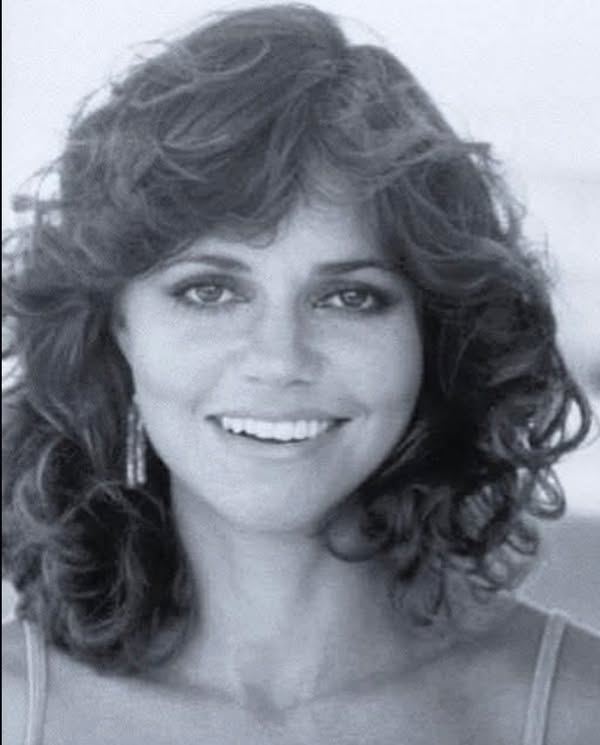
There are few names in Hollywood that evoke as much admiration, emotional depth, and lasting respect as Sally Field. A woman of immense talent and quiet strength, Field’s journey from the bubbly, teenaged star of a 1960s sitcom to one of America’s most beloved and critically acclaimed actresses is a testament not only to her skill but to her resilience. At 76 years old, Sally Field remains an enduring icon — not just because of her performances on screen, but also because of her courage off screen. Her honesty, her emotional transparency, and her refusal to let past pain define her future have made her a role model for generations of actors and audiences alike.
A Star is Born: Early Life and Breakout Success
Sally Margaret Field was born on November 6, 1946, in Pasadena, California, into a family that would influence both her passion and her pain. Her mother, Margaret Field, was a working actress, and her father, Richard Dryden Field, served in the military. Her parents divorced when she was still a child, and her mother’s second marriage to actor and stuntman Jock Mahoney would cast a long, painful shadow over Field’s early years.
Despite a childhood marked by emotional neglect and, as she would later reveal, disturbing abuse, Sally Field discovered early on that performance could be an escape — a place where she could express herself freely, safely, and joyfully. In high school, she became involved in acting and cheerleading, ultimately leading to her first major role on television.

In 1965, at the age of 19, Field shot to fame as the star of “Gidget,” a short-lived but charming sitcom about a young surfing enthusiast. Though the show lasted only one season, it put Field on the map, and the American public quickly embraced her warmth and charm. She followed this success with “The Flying Nun” in 1967, a series that ran for three seasons and made her a household name. However, behind the scenes, Field was beginning to feel boxed in by the lighthearted, often silly roles that Hollywood assigned her.
Breaking the Mold: Fighting for More Than Just a Smile
After years of being typecast as the sweet, sunny girl-next-door, Sally Field knew she wanted more from her career — and from herself. She craved complex characters, roles that mirrored the emotional depth and inner turmoil she carried from her own life. But Hollywood, notoriously unkind to women who sought to break molds, was not quick to offer her those opportunities.
So she made a bold move. Field enrolled at the famed Actors Studio and studied under Lee Strasberg, the legendary acting coach behind method acting. It was a difficult but transformative time in her life. She emerged from the experience not only with new confidence but also with a powerful dramatic performance that would change everything for her.
That moment came with the 1976 television movie “Sybil,” in which Field portrayed a woman suffering from dissociative identity disorder. The role was harrowing, emotionally intense, and unlike anything she had done before. Her performance stunned critics and audiences, earning her an Emmy Award and reshaping the way Hollywood viewed her capabilities.
Academy Awards and Critical Acclaim: A Career Reborn
Following “Sybil,” the offers began to change. And in 1979, Sally Field starred in “Norma Rae,” a film that would not only cement her place in film history but also earn her her first Academy Award for Best Actress. In the movie, Field played a Southern textile worker who becomes involved in labor union organizing — a role that demanded grit, passion, and political conviction. Her performance was nothing short of electrifying.
Field followed this with another major triumph in “Places in the Heart” (1984), a period drama in which she played a widowed mother struggling to save her farm during the Great Depression. This role earned her a second Oscar, along with one of the most memorable acceptance speeches in Academy Awards history, where she famously declared, “You like me, right now, you like me!”
While often misquoted and lightly mocked over the years, the moment captured something deeply honest — a woman who had fought to be taken seriously and finally felt seen, respected, and validated.
Personal Battles Behind the Curtain
Throughout her career highs, Sally Field carried with her a private history that she kept hidden for decades. It wasn’t until the 2018 release of her raw and courageous memoir “In Pieces” that the public would come to fully understand the trauma she had endured.
In the book, Field revealed that her stepfather, Jock Mahoney, had sexually abused her for years, beginning when she was a child. The revelation stunned the entertainment world and gave new meaning to Field’s emotional depth as an actress. It also sparked conversations about childhood trauma, silence, and the ways in which survivors navigate the complexities of fame, family, and identity.
The memoir also detailed Field’s experience with having a secret abortion at the age of 17 in Mexico, during a time when reproductive rights were severely limited. She wrote about the fear, the isolation, and the emotional weight of such a decision — one that, like many young women of her generation, she carried alone for many years.
Field’s willingness to speak openly about her trauma, especially at a time in her life when she could have chosen comfort over confrontation, demonstrated her unwavering courage. She became not just an actress but a truth-teller — someone unafraid to expose her vulnerabilities to help others heal.
Love, Loss, and Complicated Relationships
Among her most talked-about relationships was her high-profile romance with actor Burt Reynolds, her co-star in the blockbuster hit “Smokey and the Bandit” (1977). The two were magnetic on screen and in real life, but their relationship was often turbulent. They dated on and off for several years, and while fans adored their chemistry, Field later admitted the relationship had been deeply unhealthy.
In various interviews — including a candid 2022 appearance on “Watch What Happens Live with Andy Cohen” — Field reflected on the emotional challenges of that time. When asked about her worst on-screen kiss, she named Burt Reynolds, explaining with a smirk that it involved “a lot of drooling.” But the comment, while light-hearted, hinted at deeper issues beneath the surface.
After Reynolds’ death in 2018, Field revealed that the two hadn’t spoken in the final decades of his life. In her memoir, she wrote that while Reynolds was charming and charismatic, he was also controlling, emotionally distant, and dismissive of her needs. “He was just not good for me in any way,” she said — a powerful statement about the importance of self-worth and emotional health.
A Continuing Legacy: New Roles, New Causes
Even as she entered her seventies, Field continued to work — not out of necessity, but from passion. She starred in projects like “Dispatches from Elsewhere” (2020) and “Winning Time: The Rise of the Lakers Dynasty” (2022), demonstrating that her talent had not dimmed with age. Her performances remained nuanced, layered, and captivating.
In addition to acting, Field has become a vocal advocate for women’s rights, LGBTQ+ rights, and mental health awareness. She’s spoken at rallies, participated in marches, and used her platform to raise awareness for issues close to her heart.
Her advocacy extends into her family life as well. Field has been supportive of her son, Sam Greisman, who is gay, and has spoken publicly about the importance of acceptance, love, and being a vocal ally to the LGBTQ+ community.
Awards, Recognition, and a Life Well-Lived
In 2023, Field was honored with the Screen Actors Guild Life Achievement Award, a recognition of not just her performances but her integrity, courage, and dedication to the craft of acting. Colleagues praised her professionalism, her kindness, and her trailblazing influence in an industry that hasn’t always been welcoming to women with opinions and pain.
From the lighthearted days of Gidget to the raw power of Norma Rae and beyond, Sally Field has created a body of work that spans genres, generations, and emotional spectrums. Her story is one of transformation — from a silenced young girl to a celebrated woman unafraid to speak truth to power.
A Legend Whose Legacy Is Still Unfolding
To admire Sally Field is to admire the full spectrum of the human experience. She is joy and pain, laughter and sorrow, courage and vulnerability. She’s a reminder that even the brightest stars can come from the darkest places — and that the most unforgettable performances often come from those who have lived, endured, and emerged whole on the other side.
At 76, Sally Field’s career continues to inspire. But it’s her honesty, her empathy, and her enduring spirit that make her truly unforgettable. Whether you know her as Forrest Gump’s mother, Mrs. Doubtfire’s ex-wife, the union leader Norma Rae, or simply as herself, one thing is certain: Sally Field has never been just a role — she’s a revelation.