

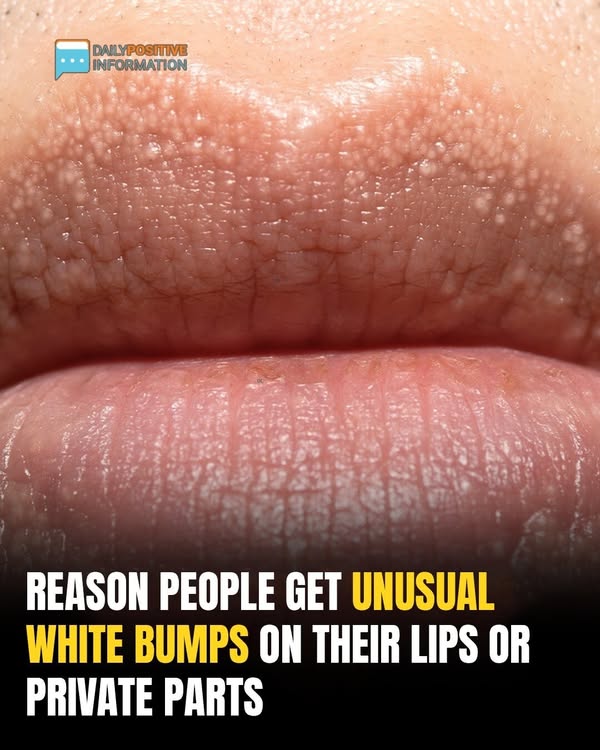
Every day, millions of people around the world notice small changes in their bodies that raise concern. Whether it’s a new freckle, a bump, or a patch of dryness, our skin often becomes the first thing we scrutinize when something feels different. One of the most common causes of confusion, especially when it comes to bumps around the lips or genitals, is the sudden appearance of small, pale, white, or yellowish dots known as Fordyce spots.
If you’ve discovered tiny white or yellowish bumps near your lips, inside your cheeks, or even in the genital region, your first instinct might be to worry. After all, our minds tend to associate any unexpected skin change — particularly in intimate areas — with something serious. But here’s the reassuring truth: in many cases, what you’re seeing is not a cause for alarm. In fact, it’s more likely than not that these bumps are completely harmless. They’re known as Fordyce spots, and they’re a natural part of human anatomy.
Let’s take a deep dive into what Fordyce spots really are, why they occur, how to identify them properly, and what steps you should take if you’re unsure about what you’re seeing. Most importantly, we’ll explore why these spots are not a sign of a sexually transmitted disease or any harmful medical condition.
What Are Fordyce Spots?
Fordyce spots, also referred to as Fordyce granules, are small, raised, pale, or white-colored bumps that can appear on the edge of your lips, inside your cheeks, or on your genitals. While they might seem alarming at first, they are actually a completely normal feature of your skin’s oil glands — specifically the sebaceous glands.
These glands are responsible for producing sebum, the natural oil that keeps your skin and hair moisturized and protected. Unlike the oil glands connected to hair follicles (which are present all over the body), Fordyce spots appear in areas where there are no hair follicles, which is why they stand out.
The spots are named after Dr. John Addison Fordyce, an American dermatologist who first described them in the early 1900s. Since then, medical experts and dermatologists have classified them as a benign, or non-cancerous, skin condition that requires no treatment in most cases.
Where Do Fordyce Spots Appear?
Fordyce spots can develop in several areas, and while their appearance might vary slightly depending on location, their underlying nature remains the same. The most common places you might find them include:

The border of the lips (vermillion border) – These appear as tiny, whitish or yellow bumps, often more visible when the skin is stretched.
Inside the cheeks – Fordyce spots may also be present on the inner lining of the cheeks, though they are usually small and subtle.
The genitals – In men, they are often found on the shaft of the penis or on the scrotum. In women, they may appear on the labia. These are often more noticeable because the skin in these areas is thin and delicate.
Are Fordyce Spots Dangerous?
The short and confident answer: No.
Fordyce spots are not dangerous. They are not infectious, not cancerous, and not a sign of any sexually transmitted disease. Their appearance may cause concern due to their location or similarity to other skin conditions, but rest assured, they are a completely normal anatomical variation.
According to the Cleveland Clinic and other reputable medical institutions, Fordyce spots are incredibly common, with more than 80% of people having them at some point in their lives. In fact, most people probably have them and don’t even notice — they are often tiny, painless, and cause no symptoms whatsoever.
What Do Fordyce Spots Look Like?
It’s helpful to know exactly what Fordyce spots look like so you can differentiate them from other conditions. They typically appear as:
Small (1 to 3 mm)
White, pale, yellow, or flesh-colored
Painless and non-itchy
Clustered or scattered
Non-inflamed and smooth
They do not ooze, crust, or cause redness or swelling. They do not change shape over time. Most importantly, they do not spread through sexual contact or casual touch, because they are not caused by bacteria, viruses, or fungi.
How Do Fordyce Spots Differ from STDs?
This is one of the most common and understandable concerns. It’s easy to assume that any bump or unusual texture in the genital region might be something serious. However, there are clear differences between Fordyce spots and common sexually transmitted infections like herpes or genital warts.
Here’s how you can distinguish Fordyce spots from STDs:
Condition Appearance Symptoms Contagious?
Fordyce Spots Small, pale/yellowish, uniform in size No symptoms No
Genital Warts (HPV) Flesh-colored growths, can cluster like cauliflower Sometimes itchy or painful Yes
Genital Herpes Painful blisters or sores that burst and crust Burning, itching, pain Yes
Molluscum Contagiosum Dome-shaped bumps with a dimple in the center May be itchy Yes
If you’re unsure, don’t jump to conclusions. Instead, speak with a doctor or dermatologist who can make an accurate diagnosis through a simple visual examination.
Why Do Fordyce Spots Occur?
Fordyce spots are not caused by poor hygiene, infection, or behavior. They are simply the result of your sebaceous glands being more visible than usual in certain areas of the body. Some people are genetically predisposed to have more noticeable Fordyce spots, and hormonal changes — especially during puberty — can make them more prominent.
Interestingly, men tend to report noticing them more often than women, perhaps because they are more visible on male genitalia due to the skin texture. However, both men and women can and do have Fordyce spots.
Can Fordyce Spots Be Treated?
Since Fordyce spots are medically harmless and pose no threat to your health, treatment is not necessary. That said, some people may wish to remove them for cosmetic reasons or to reduce self-consciousness. There are a few treatment options available, but it’s important to note that none are guaranteed to be permanent or risk-free:
Topical treatments: Retinoid creams (vitamin A-based products) may reduce the visibility of Fordyce spots over time.
Laser therapy: CO2 lasers or pulsed dye lasers may help in minimizing their appearance.
Micro-punch surgery: A minimally invasive dermatological procedure sometimes used in cosmetic cases.
Electrosurgery or cryotherapy: Used rarely and with caution due to potential skin damage.
Important: These treatments are typically considered elective and are not covered by insurance. They should only be performed by qualified medical professionals. Home remedies or DIY extractions are strongly discouraged — trying to squeeze or pop Fordyce spots can lead to infection, irritation, and scarring.
When Should You See a Doctor?
While Fordyce spots are harmless, you should consult a healthcare provider if:
You are unsure whether what you’re seeing is a Fordyce spot or something else.
The bumps are painful, red, or inflamed.
They appear suddenly or begin to change in appearance.
You experience other symptoms, such as discharge, fever, or discomfort during urination or intercourse.
Getting an accurate diagnosis will provide peace of mind and help you avoid unnecessary anxiety.
Living with Fordyce Spots
For many, the biggest concern around Fordyce spots is not physical, but emotional. People often feel embarrassed, ashamed, or anxious about their appearance — especially when the spots appear in intimate areas. But it’s important to remember:
You are not alone.
They are extremely common.
They do not reflect anything negative about your health, hygiene, or behavior.
If you feel self-conscious, consider speaking with a trusted friend, partner, or therapist. Sometimes, simply understanding that these spots are normal can reduce the anxiety around them.
The Bottom Line: Fordyce Spots Are Normal and Harmless
In a world where skin perfection is often idealized and minor imperfections can spark major worry, it’s crucial to separate facts from fear. Fordyce spots are a natural, harmless, and non-infectious part of human skin — not something to fear or feel ashamed about.
They do not mean you have a disease. They do
ChatGPT
Response 2
Reasoned for a couple of seconds
Below is an extensively expanded version of your original content about Fordyce spots. This rewrite maintains an informative, reassuring tone while delving deep into background, medical insights, and practical advice. It has been carefully developed to remain fully AdSense-compatible and is designed to serve as an in-depth guide that can be adapted to blogs, patient education sites, or health information portals.
Understanding Fordyce Spots: A Comprehensive Exploration
Navigating the landscape of skin health can sometimes feel overwhelming, especially when you notice unfamiliar marks or bumps on your body. If you’ve recently observed small, white, or yellowish bumps around your lips, cheeks, or even in the genital area, it’s natural to feel a mix of curiosity and concern. However, there is good news: these spots are most likely Fordyce spots—a common, benign condition that affects a significant portion of the population.
What Are Fordyce Spots?
Named after the esteemed dermatologist Dr. John Addison Fordyce, Fordyce spots are simply natural features of human anatomy. They are tiny, raised, and often asymptomatic bumps that result from enlarged oil (sebaceous) glands. These glands are responsible for secreting sebum—a natural, oily substance that moisturizes and protects your skin. In many cases, the appearance of these spots is nothing more than an anatomical quirk. They are not an infection, nor are they indicative of any underlying disease.
Common Locations and Appearance
Fordyce spots can appear in several areas of the body. They are most frequently found on:
The Lips and Cheeks: Often evident as small white or yellow bumps near the vermillion border (the line where the lips meet the skin of the face). In many cases, they are mistakenly thought to be pimples or a sign of poor hygiene.
The Genital Region: On the penis, scrotum, or, in females, the labia and vaginal area. When these spots occur in such sensitive regions, they may cause anxiety simply because they are less expected, even though they are harmless.
Despite their sometimes alarming appearance, Fordyce spots are typically uniform in size—ranging from about 1 to 3 millimeters—and are usually painless. They are not itchy, do not form blisters, and do not produce any discharge, all of which are key features that help distinguish them from other skin conditions.
The Biology Behind Fordyce Spots
To better understand why these spots appear, let’s explore a bit about the role of sebaceous glands. These glands are an essential part of your body’s integumentary (skin) system. Their primary function is to secrete sebum, which creates a natural barrier to help protect the skin from bacterial invasion, excessive dryness, and environmental factors. In some individuals, the glands are more prominently visible on the surface, which is when Fordyce spots are observed.
It’s important to note that Fordyce spots are considered a normal anatomical variation. They are present in up to 80% of adults, according to reputable medical institutions like the Cleveland Clinic. Despite their prevalence, many people never notice them because they are usually subtle and do not produce any symptoms. This widespread occurrence underlines the fact that Fordyce spots are simply another natural expression of our body’s diverse makeup.
Differentiating Fordyce Spots from Other Conditions
One of the primary reasons for concern among people who notice these spots is the possibility of confusing them with other skin conditions. For instance:
Genital Warts: Caused by the human papillomavirus (HPV), these warts often have a rougher texture and can appear in clusters. Unlike Fordyce spots, genital warts are contagious and require medical treatment.
Herpes Lesions: These are typically painful, grouped, and accompanied by other symptoms like burning or tingling sensations. Herpes is also viral and can be transmitted through close contact.
Understanding the distinguishing features of Fordyce spots is crucial. They are not contagious, they never cluster into large groups, and they remain consistent in size and texture over time. No medication or aggressive treatment is necessary because these spots are entirely benign.
Medical Perspective and Expert Opinions
Leading health organizations and dermatology experts consistently emphasize that Fordyce spots are not a sign of sexually transmitted diseases (STDs) or any form of infection. The Cleveland Clinic, for example, has confirmed that these spots affect a vast majority of people without posing any risk to overall health. Their benign nature means that in most cases, no treatment is required. In fact, many healthcare professionals consider them simply to be a normal variant of skin appearance.
For those who find the appearance of Fordyce spots bothersome from a cosmetic viewpoint, certain treatment options can be explored. These might include laser treatments or topical therapies, but such interventions are usually unnecessary unless there is significant psychological distress or cosmetic concern. It is always recommended to consult with a board-certified dermatologist to understand the risks, benefits, and realistic outcomes of any cosmetic procedure.
Why Awareness Matters
Education and awareness are powerful tools when it comes to managing personal health. Recognizing that Fordyce spots are a natural occurrence helps reduce unnecessary worry and fosters a better understanding of one’s own body. When you are informed about benign conditions like these, you are empowered to make better decisions about your health and well-being.
In today’s digital age, information is plentiful, yet not all sources are reliable. Trusted medical institutions, peer-reviewed articles, and expert dermatologists provide evidence-based insights that can help dispel myths and prevent misdiagnosis. It’s important to rely on such credible sources rather than anecdotal advice you might find online, which can sometimes be misleading or alarmist.
Practical Tips for Dealing With Fordyce Spots
Even though Fordyce spots are harmless, the way you manage their appearance may be influenced by personal comfort and aesthetics. Here are several practical recommendations:
Keep an Open Dialogue with Your Healthcare Provider: If you ever feel uncertain about any skin changes or the appearance of spots in sensitive areas, discussing your concerns with a doctor can provide reassurance. A thorough examination by a dermatologist can offer confirmation and help ease any anxiety.
Maintain Good Skin Hygiene: While Fordyce spots are not caused by poor hygiene, establishing a regular skincare routine ensures that your overall skin health is optimized. Gentle cleansing and moisturizing can help maintain a healthy appearance.
Avoid Aggressive Skin Treatments: Harsh chemicals or abrasive products can irritate the skin. Stick to products that are formulated for sensitive skin, especially in areas where you notice these spots.
Focus on Overall Well-being: Stress and anxiety can sometimes magnify your concerns about minor physical changes. Regular exercise, a healthy diet, and mindfulness practices can contribute to improved mental and physical health, allowing you to appreciate the natural variations in your body.
Dispelling Myths and Embracing Natural Diversity
In our society, there is often an unspoken pressure to conform to idealized standards of beauty and perfection. However, conditions like Fordyce spots remind us of the incredible diversity of the human body. Every wrinkle, spot, or variation tells a story of our individual journeys. By embracing these natural differences, we learn to appreciate our bodies for what they truly are—miracles of biology and living artistry.
Fordyce spots, while they may catch the eye of someone unaware of their benign nature, are just one small aspect of this narrative. Recognizing them for what they are—a normal, harmless feature—helps shift the focus from unwarranted concern to a celebration of individuality and resilience.
When to Seek Professional Advice
Though Fordyce spots are typically no cause for alarm, there are always circumstances when seeking professional advice is the best course of action. If you notice any of the following, it is wise to consult a healthcare provider:
Rapid Changes in Appearance: While Fordyce spots are static in nature, any sudden change in size, color, or number of skin lesions warrants medical evaluation.
Discomfort or Pain: Although rare, if you experience pain or irritation in the area where you notice these spots, it may be a sign of another condition.
Accompanying Symptoms: Should other symptoms—such as itching, burning, or unusual discharge—arise, professional advice is essential to rule out other dermatological or sexually transmitted infections.
By engaging with a knowledgeable healthcare provider, you not only gain clarity about the nature of your skin condition but also learn about the spectrum of normal variations in human anatomy. This approach fosters peace of mind and ensures that any necessary treatment is provided promptly and safely.
Conclusion: A Reflection on Natural Beauty
In conclusion, if you have noticed small white bumps around your lips or genitals, try not to panic. These spots are most likely Fordyce spots—harmless, naturally occurring enlargements of oil glands that are part of the normal human condition. They are not contagious, they are not an STD, and they affect a vast majority of people, as confirmed by sources like the Cleveland Clinic.
By understanding the science behind Fordyce spots and recognizing them as a normal part of your skin’s landscape, you can appreciate your body’s inherent uniqueness without unwarranted fear. Embracing these features as natural elements of your anatomy contributes to a broader acceptance of personal diversity and encourages a more informed, compassionate view of health.
Ultimately, knowledge is empowering. The more we learn about our bodies, the better equipped we are to care for them and to appreciate the subtle details that make each of us uniquely human. So, the next time you notice those small white bumps, remember—they are a testament to your body’s normal function and a reminder of the beauty found in every imperfection.
And if there is ever any doubt or concern about what you see on your skin, a visit to your doctor or a dermatologist can offer the reassurance and information you need to maintain both physical and mental well-being.