

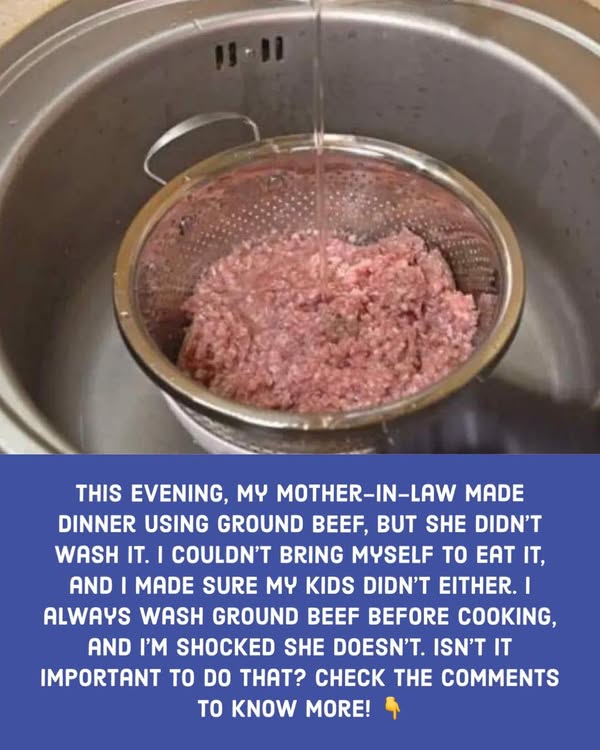
It was just another ordinary weekday evening when our family gathered for dinner at my mother-in-law’s house. She had kindly offered to make dinner for us—a gesture I truly appreciate. The meal smelled delicious as we walked through the door, the aroma of seasoned ground beef wafting from the kitchen. I could tell she had put in effort, and everything looked inviting. But just as we sat down to eat, I noticed something that made me feel uneasy: she hadn’t washed the ground beef before cooking it.
That may not seem like a big deal to everyone, but in my household, it’s a long-standing tradition to rinse ground beef before it hits the frying pan. My mom did it. I do it. It’s a habit passed down, and one I’ve always believed was part of preparing clean, safe meals for my family—especially for my kids.
I felt torn. I didn’t want to offend her or seem ungrateful, but I couldn’t bring myself to eat the meal. More importantly, I didn’t feel comfortable letting my kids eat it either. I quietly made an excuse, saying the kids had already eaten earlier. She didn’t question it, and we moved on. But later that night, I couldn’t stop thinking about it. Was I being too cautious? Or was I right to be concerned?
So I did what many of us do when we’re unsure—I turned to research. I wanted to understand what the food safety guidelines and professional chefs had to say about this often-debated kitchen topic. Should ground beef really be washed before cooking? Or is that a myth that’s better left in the past?
Let’s explore the facts, the common misconceptions, and the reasons why people feel so strongly on both sides of this meaty issue.
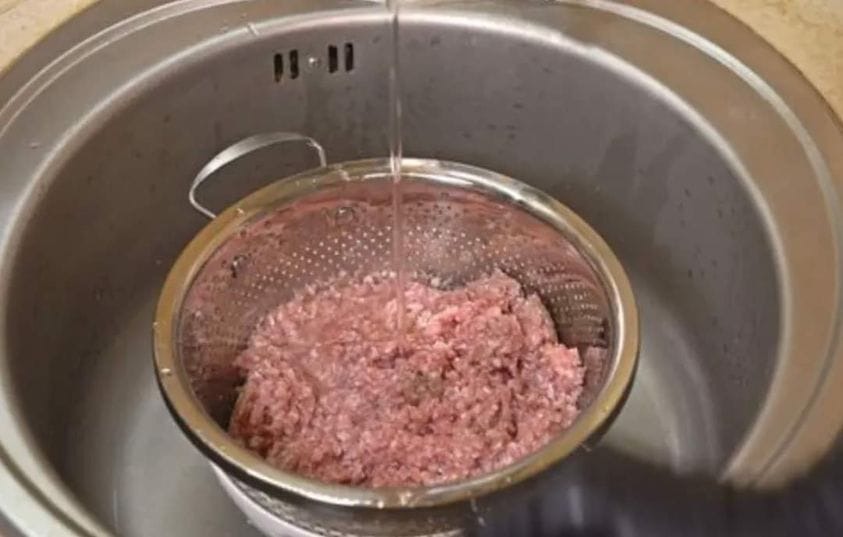
Why Some People Insist on Washing Ground Beef Before Cooking
For many home cooks, washing meat before cooking is second nature. It’s seen as a way to remove excess blood, bone fragments, packaging residue, or even perceived bacteria. Some believe rinsing ground beef under cold water can remove unwanted surface materials, reduce fat content, and leave the meat feeling fresher and cleaner.
Those who are more health-conscious sometimes rinse their ground beef in an attempt to remove some of the fat before cooking. They believe that by doing this, they can make their meals leaner and reduce the overall grease in the pan. For families with young children or individuals with sensitive digestive systems, this extra step can feel like a protective measure—one that adds peace of mind to meal preparation.
Culturally, this habit is deeply rooted in some households. It’s part of the cooking ritual, just like washing fruits or vegetables. For those who grew up seeing their parents or grandparents do it, skipping the step may feel like breaking a tradition or taking a shortcut.
Why Food Safety Experts Strongly Advise Against It
While the instinct to rinse meat comes from a place of caution, many food safety experts, including those from the U.S. Department of Agriculture (USDA), advise against washing any raw meat—especially ground beef.
Why? Because rinsing raw meat doesn’t eliminate bacteria. In fact, it can actually spread bacteria more widely than if you just cooked it directly. Water can splash contaminated droplets all over your sink, countertops, and even nearby utensils or dishes, increasing the risk of cross-contamination. Harmful bacteria like Salmonella and E. coli are not killed by cold water. They are only destroyed through proper cooking.
The USDA has consistently stated that cooking ground beef to an internal temperature of at least 160°F (71°C) is the most effective way to ensure safety. That temperature is hot enough to eliminate any pathogens that might be present in the meat. Washing, on the other hand, poses more risk than benefit.
Does Rinsing Ground Beef Reduce Fat? Not Really.
Another common reason people rinse ground beef is to “drain the fat,” especially if the meat is higher in fat content. But here’s the truth: rinsing doesn’t actually reduce fat in a meaningful way. Instead, draining the meat after cooking is much more effective. When ground beef is browned, the fat naturally separates and can be spooned out or drained using a colander. Some people even pat the meat dry with paper towels to remove residual grease.
Rinsing uncooked meat might give the illusion of reducing fat, but it doesn’t compare to the fat reduction you can achieve with smart cooking and draining methods.
The Texture and Flavor Factor
There’s another important argument against rinsing ground beef, and it has to do with taste and texture. Many chefs argue that water alters the structure of the meat. Introducing excess moisture before cooking can result in a soggier texture and prevent browning, which is crucial for developing deep flavor through a process called the Maillard reaction.
If you’ve ever noticed that ground beef turns grey and steams instead of sizzling and browning, chances are there was too much moisture in the pan. Rinsing before cooking contributes to this issue, especially if the meat isn’t thoroughly patted dry.
Keeping ground beef dry before it hits the pan allows it to caramelize beautifully, creating the rich, savory flavor that makes burgers, tacos, and spaghetti sauce taste so good.
The Mess You Might Not Expect
Another practical concern is the mess created by rinsing raw meat. Water mixed with raw juices often splashes in unpredictable directions. Even if you’re careful, droplets can land on surfaces like cutting boards, kitchen towels, and dish racks, turning your kitchen into a zone of potential contamination.
Not to mention, any fat or grease that ends up in your sink can lead to serious plumbing issues down the road. When fat cools, it solidifies and can clog your pipes, resulting in expensive repairs. Plumbing experts and food safety professionals both recommend letting fat cool in a container, harden, and then throwing it in the trash.
What’s the Best Practice According to Experts?
So, what should the average home cook do?
The official recommendation from food safety organizations is to skip the rinse and focus on safe cooking temperatures. Use a meat thermometer to ensure your ground beef reaches 160°F. Don’t rely on color alone—some beef can appear brown before it’s fully cooked.
After cooking, feel free to drain excess fat, blot with a paper towel, or use leaner cuts of ground beef to begin with. These steps provide a cleaner, healthier result without increasing your risk of contamination.
Final Thoughts: Respecting Traditions While Staying Safe
Food habits are often emotional. They’re tied to how we were raised, who taught us to cook, and what we believe keeps our families safe. I don’t fault my mother-in-law for her method. She’s a wonderful cook, and her intentions are always full of love. But when it comes to ground beef and kitchen safety, I’ve learned that the science is clear: washing isn’t necessary—and it might actually do more harm than good.
If you’re someone who has always washed ground beef, it might feel uncomfortable to break that habit. That’s okay. Change takes time. But understanding the reasons behind expert recommendations can empower you to make choices that protect your family’s health and well-being.
Whether you rinse or don’t rinse, the most important takeaway is this: cook your meat thoroughly, keep your kitchen clean, and trust your instincts. If something doesn’t feel right—like it didn’t for me that evening—it’s okay to speak up or make your own food choices, even in sensitive family settings.
And next time you’re wondering what to do with your ground beef, remember: the sizzle in the pan—not the water in the sink—is what brings out the best in your meal.