

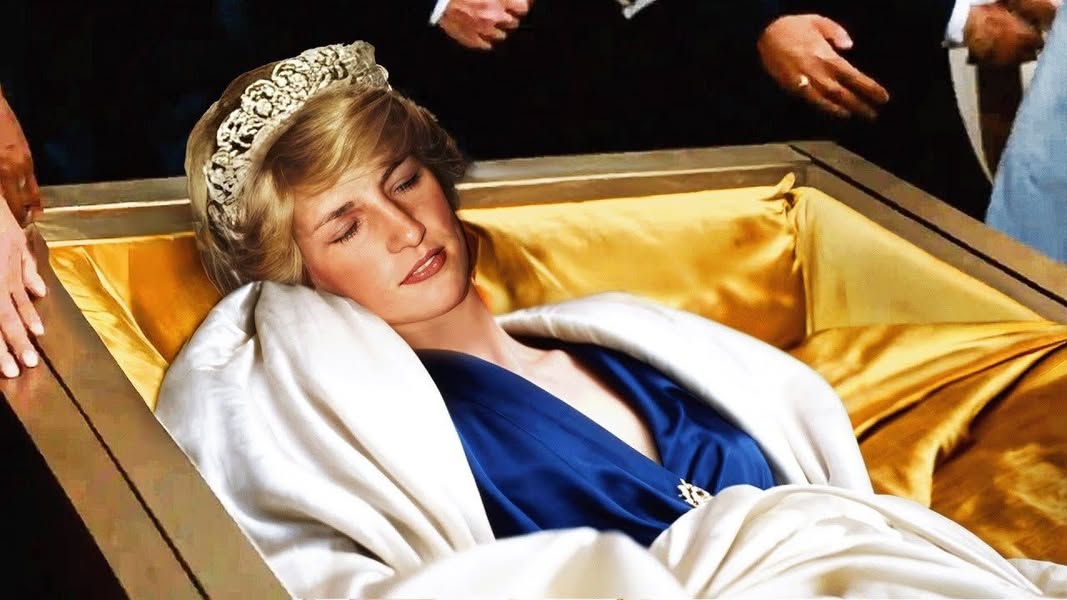
More than two decades after her untimely passing, Princess Diana continues to captivate the world—not merely as a member of the British royal family, but as a symbol of compassion, strength, and enduring humanity. Her story is one of profound impact, personal struggle, and an unwavering dedication to others, transcending her title as “The People’s Princess” to become an icon for generations past, present, and future.
Nestled in the heart of the Althorp Estate, Diana’s final resting place lies on a secluded island in Oval Lake—a quiet, tranquil spot shielded from the public eye, offering her family a private place to grieve, remember, and honor her memory. It is a place visited not by thousands of tourists, but by the hearts of millions who still carry her story with them, silently and reverently.
Princess Diana’s sons, Prince William and Prince Harry, both hold their mother’s memory close. As they’ve matured and carved their own paths in life, they’ve drawn inspiration from her values. William has taken up the mantle of mental health awareness, co-founding campaigns that destigmatize seeking help and prioritizing emotional wellbeing. Meanwhile, Harry has committed himself to humanitarian work around the world, focusing on veterans, wounded service members, and mental health as well. Both brothers continue to walk in their mother’s footsteps, ensuring her legacy remains alive—not in theory, but in action.
Diana’s influence on the royal family and on British society cannot be overstated. At a time when royal traditions often seemed cold and inaccessible, she brought warmth and relatability to the monarchy. She reached across boundaries, shook hands with AIDS patients without gloves at a time when misinformation caused widespread fear, and held children in war zones with genuine love and empathy. In doing so, she humanized the monarchy in ways no one had before.
Her ability to connect emotionally with people from all walks of life made her more than a figurehead; she became a friend to the world. Whether visiting homeless shelters, walking through landmine fields in Angola, or advocating for children’s hospitals, Diana used her platform to uplift causes that others were too afraid to champion. Her choices, often bold and deeply personal, challenged societal norms and gave a voice to the voiceless.
And yet, Diana’s story was also one of personal struggle—her battles with bulimia, anxiety, and the immense pressures of public life were well-documented, and she spoke openly about them. Rather than hiding these vulnerabilities, Diana embraced them, bringing awareness to issues that were long silenced, especially within elite and conservative circles. In her honesty, she gave courage to countless others facing similar struggles. She showed that vulnerability is not a weakness but a powerful bridge to connection and understanding.
Despite her challenges—some of which played out publicly in front of the world—Diana never lost sight of her mission to make the world a better place. Whether she was comforting a child with cancer or supporting bereaved families, she gave her time, her energy, and her heart without asking for anything in return. Her work with landmine victims through The HALO Trust remains one of her most remembered legacies, influencing major policy changes and awareness efforts in the years following her death.
Tragically, Diana’s life was cut short on August 31, 1997, in a car accident in Paris that shocked the world. The grief that followed was unprecedented, as millions of people across continents mourned someone they felt they knew personally, even if they had never met her. For days, mourners filled the gates of Kensington Palace with flowers, letters, and candles. The emotional outpouring of love was a reflection of just how deeply she had touched the hearts of people from all backgrounds.
Over the years, conspiracy theories have lingered about the circumstances surrounding her death, but royal historians and Diana’s own family have repeatedly asked the public to remember her life—not her final moments. The focus, they urge, should remain on the light she brought into the world and the legacy she left behind—a legacy of empathy, action, and boundless grace.
Today, Diana remains a global figure of inspiration. Her image still graces murals, documentaries, charity campaigns, and countless tributes. Younger generations who never had the chance to see her alive are nonetheless moved by her story. The causes she supported have not only endured—they’ve flourished. From global HIV/AIDS awareness to landmine eradication and children’s health, her influence is felt in tangible ways that continue to save and improve lives.
Her fashion, too, remains iconic—not just for its beauty, but for its meaning. Diana used style as a form of expression and sometimes as quiet resistance. Her wardrobe choices told stories: from bold colors in developing countries to the famous “revenge dress” that spoke louder than words, her sense of style became a tool for self-empowerment. Today’s fashion designers and public figures still reference her as a muse.
Moreover, her emotional openness changed the way people perceived vulnerability and authenticity in public figures. Before Diana, the royal family had long maintained a tradition of stoicism. After Diana, the doors were opened to a more emotionally accessible monarchy. Her influence can be seen in how William and Harry interact with the public, how they speak about mental health, and how the modern royal family balances duty with human connection.
The world continues to reflect on what Diana meant and what she represents. For many, she symbolizes the triumph of empathy over protocol, of personal courage over public pressure, of kindness over detachment. Her spirit endures in the charities she championed, the children she inspired, and the lives she changed with a simple touch, a heartfelt hug, or a word of encouragement.
At the heart of Princess Diana’s legacy is something that transcends royalty, fame, and status—it is the pure and simple truth that love, when given freely and fearlessly, has the power to heal, transform, and endure. She may no longer walk among us, but in the stories shared by those she touched, in the eyes of her sons, and in the ongoing work of the charities she supported, Diana lives on.
And so, the island on Oval Lake is more than a burial place—it is a beacon. A reminder that while lives may end, legacies like Diana’s never fade. They continue to inspire, to lift, and to challenge us all to lead with our hearts.