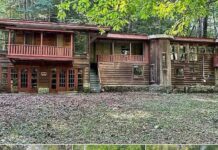


In the golden hills of Santa Barbara County, nestled between the forested foothills of Los Padres National Forest and the winding roads of Los Olivos, lies a place that was once a symbol of opulence, fantasy, and controversy: Michael Jackson’s Neverland Ranch. Once a private wonderland for the world’s most famous entertainer, this sprawling estate has witnessed laughter, celebrity visits, wild allegations, and eventual abandonment. Today, it tells a quieter story — one of faded grandeur, real estate deals, and shifting legacies.
More than a decade after Jackson’s tragic and sudden passing in 2009, Neverland has been sold — but not for the staggering $100 million price tag it once carried. Instead, it was quietly purchased by billionaire businessman Ron Burkle for just $22 million, a figure that stunned fans and real estate experts alike.
But what became of the estate? What does it look like now? And what’s the deeper story behind this iconic property that once embodied the dreams and demons of a pop culture icon?
Let’s take a journey into the heart of Neverland — past, present, and future.
A Magical Dream: How Michael Jackson Created Neverland
Back in 1988, Michael Jackson was at the peak of his fame. Fresh off the groundbreaking success of his albums Thriller and Bad, the King of Pop was not just a musical phenomenon — he was a global cultural force. Craving privacy and creative freedom, Jackson purchased what was then called the Sycamore Valley Ranch for a reported $17 to $30 million from real estate mogul William Bone.
Jackson, known for his love of fantasy and childlike wonder, transformed the 2,800-acre property into a one-of-a-kind sanctuary. He renamed it “Neverland” after the fictional island in Peter Pan, the tale of a boy who never grows up — a name that would come to define Jackson’s worldview and personal mythology.
Over the years, Jackson reportedly spent over $35 million upgrading and customizing the estate. It became a surreal playground, complete with its own amusement park, zoo, private train system, and concert-grade theater.
The Neverland Valley Railroad featured two lines — one of them boasting a steam locomotive named “Katherine” after his mother. The park included a Ferris wheel, carousel, bumper cars, roller coaster, and more — all designed to be shared with sick children and guests from around the world.
A Star’s Paradise and a Symbol of Controversy
Neverland was more than just a home — it was Jackson’s personal escape and emotional sanctuary. But it was also the center of swirling rumors, tabloid stories, and eventually, criminal investigations.
Some of the estate’s most notable moments included:
Elizabeth Taylor’s wedding to Larry Fortensky in 1991.
Jackson’s legendary 1993 interview with Oprah Winfrey, broadcast live from the ranch, where he opened up about his childhood and vitiligo diagnosis.
A 1995 event where Jackson and then-wife Lisa Marie Presley hosted underprivileged children from around the world, fulfilling Jackson’s philanthropic mission.
But by 2003, Neverland’s fairy-tale image was irrevocably tarnished. Following allegations of child molestation, the ranch was raided by police. Though Jackson was later acquitted of all charges in 2005, he never truly returned to the property emotionally or physically.
In 2006, he officially moved out. “Neverland is no longer a home,” he once said. “It was violated.” The amusement rides were shut down. Staff were dismissed. And for the first time, the laughter stopped.
From Abandonment to a $100 Million Listing — and a $22 Million Reality
In the years following Jackson’s death, Neverland remained in limbo. The estate fell into disrepair, its grounds overgrown, structures weathered by time, and its magic seemingly erased.
In 2016, the estate, now rebranded back to Sycamore Valley Ranch, was listed for sale at an eye-watering $100 million. The price tag reflected not only the land and structures but the mystique and notoriety of its former owner.
Despite its fame, the property remained unsold for years. Potential buyers were likely deterred by its connection to scandal, its remote location, and its massive upkeep costs. The price was slashed several times — to $67 million, then $31 million — until it was eventually sold in 2020 to Ron Burkle for just $22 million, less than a quarter of the original asking price.
Burkle, a billionaire investor and co-founder of the Yucaipa Companies, once served as a business advisor to Jackson in the early 2000s. A spokesman said he viewed the property as a “land banking opportunity” and had no immediate plans to develop it or live there.
What Neverland Looks Like Now: A Glimpse Inside the Estate
Despite its abandonment, the bones of Neverland still stand — albeit with a quieter, more subdued presence.
The estate includes:
A 12,000-square-foot main house, with six bedrooms and multiple fireplaces.
Several guest houses and a 5,500-square-foot movie theater with a private green room and trap doors once used for magic tricks.
A train station, meticulously crafted to resemble something out of a Disney fantasy.
An artificial lake with a waterfall, open pastures, and forested hills — giving the entire property the feel of a secluded utopia.
Petting zoo remnants, with enclosures that once housed elephants, giraffes, and exotic birds.
Amusement park relics, though many rides have since been removed or fallen into disrepair.
There are still traces of Jackson’s signature style: whimsical statues, colorful murals, and even some of the floral arrangements he commissioned remain faded but visible.
Yet, it no longer feels like Neverland. It feels like a ghost town — one caught between its glorious past and uncertain future.
The Legacy of Neverland: More Than Just a House
The story of Neverland Ranch is far more than just a tale of real estate. It’s a cultural artifact — a lens through which we view fame, childhood trauma, wealth, imagination, and controversy.
For some, Neverland represents the purest essence of Jackson’s creativity and kindness. For others, it remains a place of unsettling questions and uncomfortable truths.
The property’s sale to Ron Burkle closes one chapter, but it doesn’t erase the complexities that Neverland continues to represent.
Will it be turned into a museum one day? Will the amusement park ever be rebuilt? Or will it remain a private retreat, quietly aging as memories fade?
Only time will tell.
Final Thoughts: A Home, a Fantasy, a Reminder
Neverland Ranch is more than just acreage and architecture — it’s a symbol. Of dreams fulfilled and lost. Of how fame can create castles in the air and tragedies behind closed doors.
From its enchanting beginning to its abandonment and eventual sale, Neverland remains etched in the cultural memory — a place that held the heart of Michael Jackson, and perhaps, a little piece of all of ours.
What do you think of Neverland’s fate? Should it have been preserved as a monument to Jackson’s legacy? Or is it better left to rest in peace? Share your thoughts in the comments.
And if you enjoyed this story, don’t forget to follow for more deep dives into the real stories behind the places and people who changed the world of entertainment forever.